Author: Sahara Brahmia

  • Week 1 – Defining My Style Of Production

    Written by Sahara Brahmia

    Digital Audio Workstations (DAWs) – 3/5

    I define myself as a producer because, to me, producing means taking the sounds I hear in my head and translating them into a composition. I can be walking down the street and hear something that sounds like a drone. If it gives me an idea, I record it as a voice note on my phone. Later, I try to recreate it in GarageBand or on my piano and link it with other ideas, like pieces of a chain, until it becomes a composition. When I work with other producers, I often take the lead on the creative direction. I usually have a clear idea of how I want a particular sound to feel like.

    I don’t think a producer should be defined by how much they know about music software. Producers were making music long before DAWs existed. I still want to get more confident using Ableton, because that would help me bring more of my ideas to life on my own. I think a good producer can work with whatever they have access to in that moment, whether it’s their voice, the sound of train tracks, birds or the sound of water.

    Recording techniques — 4/5 & Mixing and effects processing — 4/5

    My recording style is very performative. When I compose, I sometimes think of a song as a piece of theatre or an opera, with different acts. That helps me building the vibe and the structure of the song, while still giving me room to sing freely. I feel like also working with other producers has helped me bring my ideas to life. I usually start with just my voice. My head is my main source of instrumentals. I have melodies playing in my head, and I sing the vocals as I hear them. I record the first idea in Voice Memos on my iPhone, listen back, and then record it again with my mic and interface. Layering the vocals help me start to hear the atmosphere.

    I gave myself 4/5 because I feel confident taking an idea from a quick voice memo to a layered vocal recording.

    I feel confident using EQ and effects to shape the mood of a track. I gave myself 4/5 because I can shape sounds to suit the atmosphere I want. I’d like to get better at keeping the vocal clear when there are several layers in the mix.

    Sampling and synthesis — 3 or 4/5

    I’m comfortable experimenting with both sampling and synthesis. For example, I used the AU Sampler in GarageBand to play a recording of my voice at different pitches, and I chopped up vocal recordings to create ambient textures. I gave myself 3/5 because I feel comfortable with the basics and still have room to develop my idea. My next goal is to make a whole track using my voice as the source for the melodies, textures and percussion.

    MIDI sequencing and programming — 4/5

    I feel confident using MIDI to try out different instrument sounds and develop my ideas into melodies and rhythms. Sometimes I start with an idea in my head, and it develops as I’m playing it on my keyboard. That’s what I enjoy about using MIDI. I can hear the idea straight away, play around with it and polish it as I go. My Arturia MiniLab comes practical when I want to get an idea down quickly. I gave myself 3/5 because I’m comfortable recording and editing MIDI. My next goal is to get better at programming the more complex rhythms I hear in my head, so they still feel natural when I play them back in my DAW.

    Sound design and creative processing — 4/5 | Critical listening and analysis — 5/5

    I’m a big fan of Beethoven because, while his foundations were based on a classical structure, he never limited himself by following strict compositions rules. Reading Caplin (1991, p. 27), I learned that Beethoven used the coda, the closing section, to keep building his ideas. I can relate to that in the way I compose. I like to have structure to guide me at first, but sometimes a melody and the feeling takes me in a different route.

    Analyzing how Beethoven builds tension helped me understand how I use the structure of OWN IT (Brahmia, 2026) to surprise the listener. That shift causes the song to be more theatrical. As I was reading Caplin (1991, p. 31), I learned how sections can have a looser structure. He also discussed how Beethoven develops a short musical idea and sustain tension before a new musical idea begins. (Caplin, 1991, pp. 28-29, 41-42).
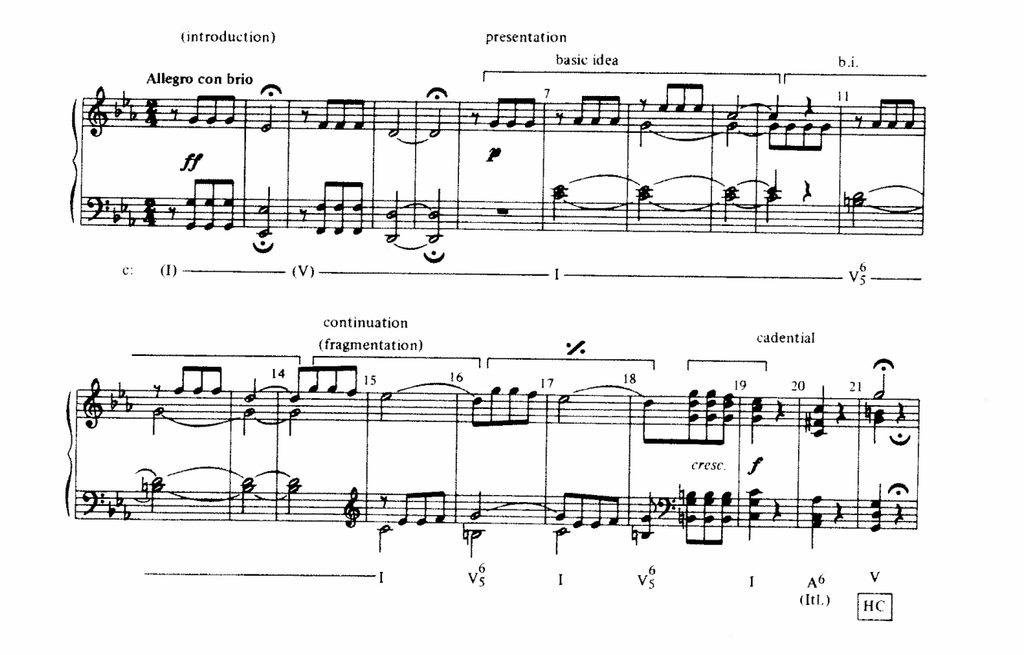
    Figure 1. Opening of Beethoven’s Symphony No. 5 in C minor, Op. 67, first movement (reproduced in Caplin, 1991, p. 28, example 5.1).

    When I came across the concept for my song, I wanted the opening to sound like the start of a completely different track. That shift causes the song to be more dramatic. Both OWN IT (Brahmia, 2026) and Beethoven’s symphonic writing build momentum and large-scale structure by repeating and fragmenting core ideas, stretching sections by breaking out of a predictable melodic pattern, and delaying resolution to maximize emotional impact.
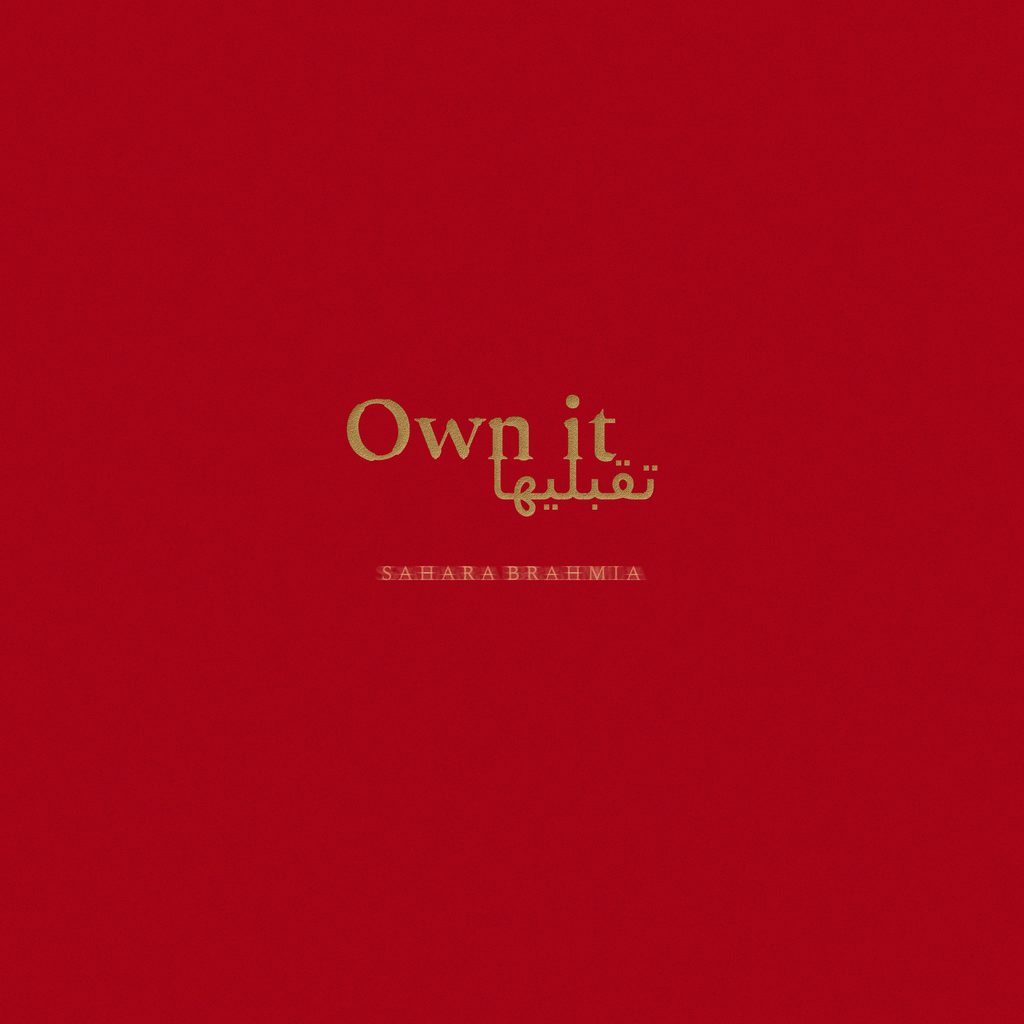
    Figure 2. Cover artwork for OWN IT by Sahara Brahmia (2026).

    Communication — 5/5 | Collaboration — 4/5 & Organization and workflow — 4/5

    I think part of being a good producer is understanding what an artist means when they describe a sound in their own words. In a Rolling Stone interview, Prince said of the artists he worked with, ‘They come to me with an idea, and I try to bring that forth’ (Karlen, 1985). That’s how I think about collaboration too. I want to know when to bring in my own ideas and when to step back and let the artist’s vision lead.

    In terms of organization, In my own sessions, I often color-code my tracks because each song has its own shades. I also write ideas in my phone notes as soon as they come to me, so I can return to them when I’m making music.
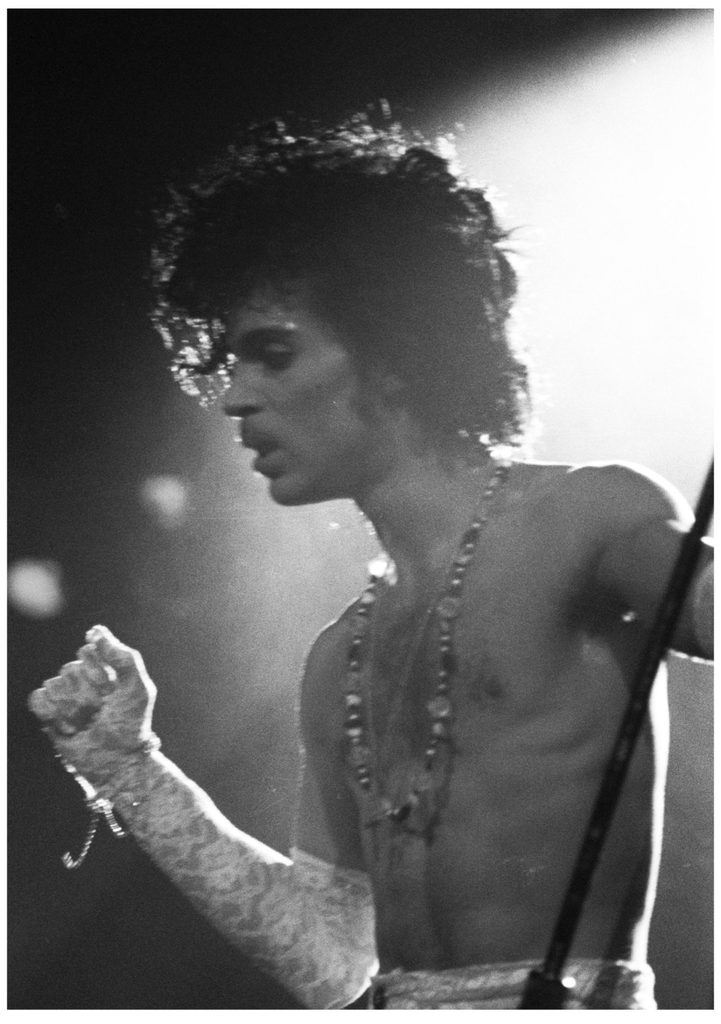
    Figure 3. Prince performing on stage (Desenio, no date).

    For me production is about vision, molding sound, coming up with melodies and turn them into a concept. I aim to be the kind of producer that surprise the listener.

    References

    Brahmia, S. (2026) OWN IT. Available at: Apple Music (Accessed: 25 November 2026). Apple Music

    Brahmia, S. (2026) OWN IT – IDEA. Available at: Watch “OWN IT” by Sahara Brahmia on YouTube

    Caplin, W.E. (1991) ‘Structural expansion in Beethoven’s symphonic forms’, in Kinderman, W. (ed.)

    Caplin, W. E. (1991) ‘Structural expansion in Beethoven’s symphonic forms’, in Kinderman, W. (ed.) Beethoven’s compositional process. Lincoln: University of Nebraska Press, pp. 27–54.

    Beethoven’s compositional process. Lincoln, NE: University of Nebraska Press, pp. 27–54. Available at: Chapter PDF (Accessed: 25 November 2026). www.cambridge.org

    Desenio (no date) Prince Print [online image]. Available at: https://desenio.co.uk/p/posters-prints/black-and-white/prince-print/ (Accessed: 26 November 2026).

    Karlen, N. (1985) ‘Prince talks’, Rolling Stone, 26 April. Available at: Prince In Print interview transcript (Accessed: 25 November 2026).
  • Week 2 – Dub Music

    Written by Sahara Brahmia

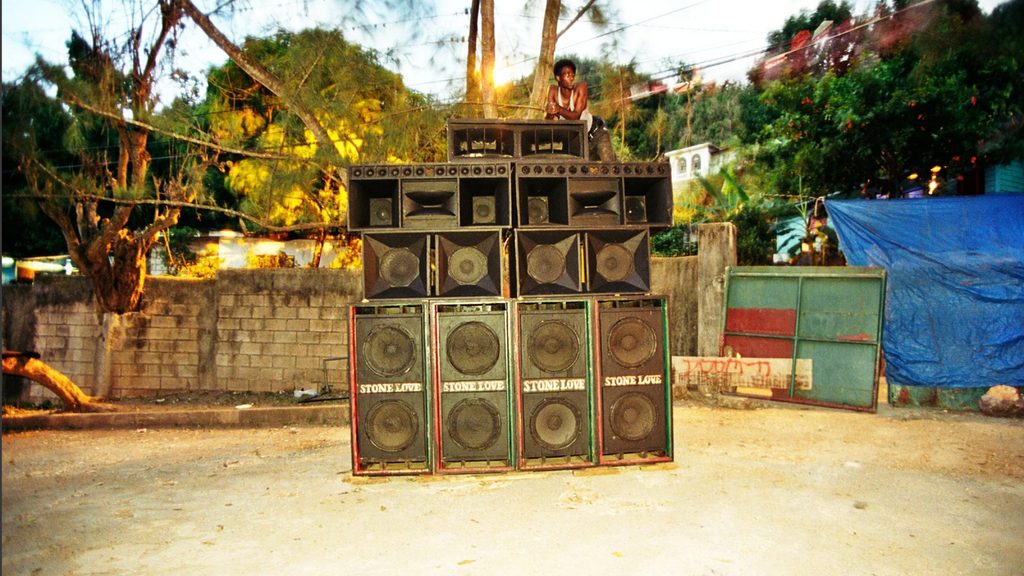
    Figure 1. Stone Love sound system speaker stack (Tilos Rádió, 2026).

    During week 2, I learned how dub music developed in Jamaica from the instrumental versions of reggae singles that appeared in the late 1960s (Herbst, 2016, p. 259). The pioneers of Dub music took existing reggae recordings and made new versions to the crowd, using the mixing desk to bring parts in and out and to emphasize echo and reverb to the front (Herbst, 2016, pp. 259-260).

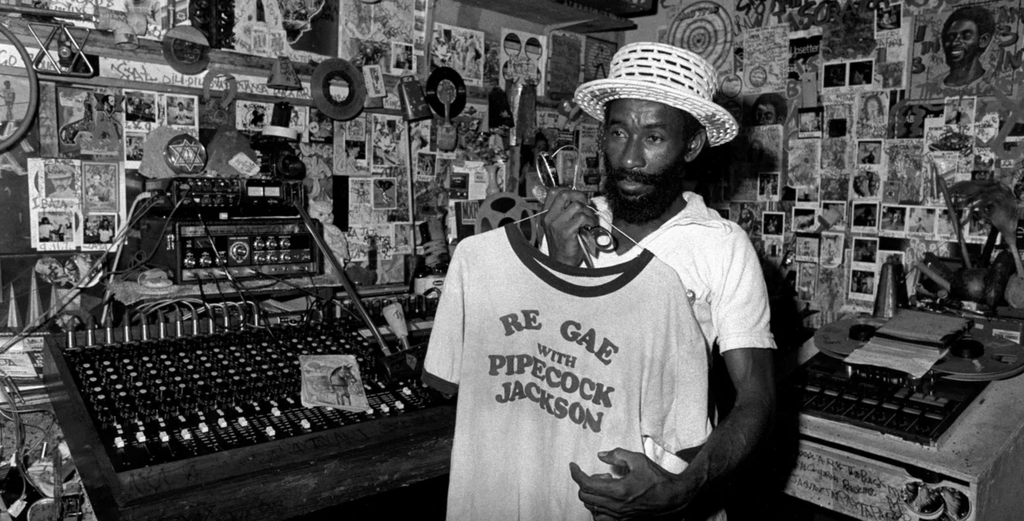
    Figure 2. Lee ‘Scratch’ Perry at the Black Ark studio, Kingston, Jamaica (photographer and date unverified).

    What stayed with me most is that dub music kept a jam session energy even as it developed into a studio practice.  Veal (2007, cited in Herbst, 2016, p. 259) describes how producers remixed existing reggae recordings, improvising with effects. For me, the most meaningful aspects were that dub producers, rather than treating the mixing as a passive tool to simply record a band’s performance, played the console live. Improvising in real time, using faders, equalizers, spring reverb and tape delays (Herbst, 2016, pp. 259-260).

    Learning that the band’s recorded performance gave the producers something to respond to made me think about my own production. While, structure is needed, I often prefer to record as if I’m jamming, to capture the true essence of that moment of the song, to let it to flow, freely. And that’s the spontaneity I relate to in Dub, even though my sound might differ from it.

    ‘Corner Crew Dub’ by Augustus Pablo (1977).

    As I was listening to Augustus Pablo’s ‘Corner Crew Dub’ (Pablo, 1977), I heard a melody that reminded me of the Hijaz Kar scale, most known as Arabic Scale in Western music theory. Additionally, another thing I noticed, was how the repeating bassline gave a hypnotic feeling and steadiness to the track. By learning more on the lead bassline, it led me to the track’s connection with Sound Dimension’s ‘Real Rock’ riddim (Sound Dimension, 2008; Riddimguide, n.d.).  The connection helped me understand intertextuality, and how the groove link the two tracks and the skillful way producers managed to give the groove a different fee to the mix.

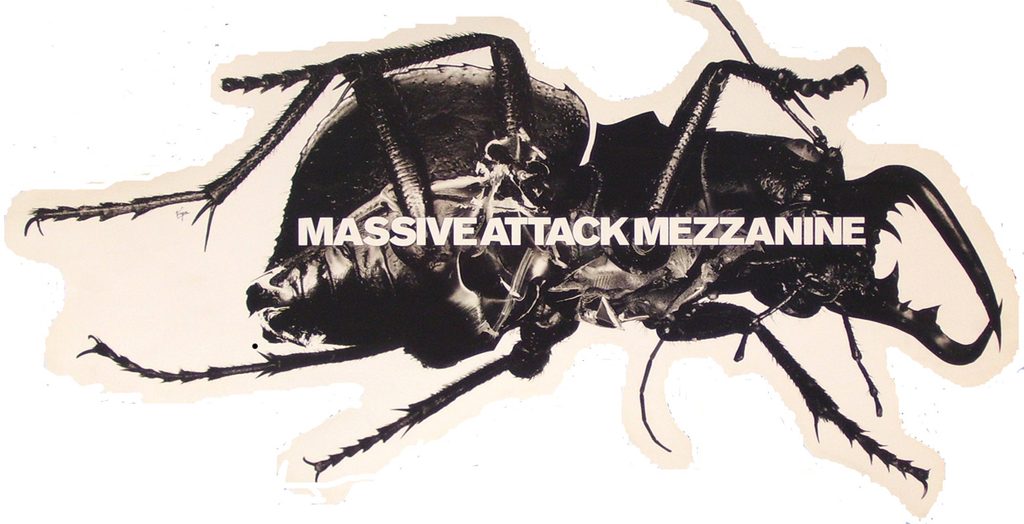
    Figure 3. Beetle artwork for Massive Attack’s Mezzanine, reproduced in The Paris Review (Gonzales, 2018).

    It made me think of how in ‘Angel’ (Massive Attack, 1998), the bass also remains distinct, as a distorted guitars build around Horace Andy’s voice. The first thing that caught my attention is the way the tension builds throughout the entire song, It’s violent, sexy, bold. As the texture gets heavier, the same bass also starts feeling more aggressive. And this is also one of my favorite things when it comes to producing a song: the slow-building intro. My motto is always, “Don’t give away too much too soon”. When a listeners think they decoded a song, you should surprise them. In ‘Angel’, the bass and vocals slowly build this almost uncomfortable tension throughout the song.

    What stayed with me most about dub was the idea that the mix could become a performance of its own. I usually prefer to record as if I’m jamming because I like to capture the feeling of that specific moment. I’d like to carry that approach into my mixing. In one of my own tracks, I could keep the bassline going while bringing vocal layers in and out, or add delay to the last word of a line and let the echo fill the space that follows. I’d like to try making those decisions in real time, responding to my recorded vocals in the same way dub producers responded to the band’s performance.

    References

    Gonzales, M.A. (2018) ‘Twenty Years Later: On Massive Attack and Mezzanine’, The Paris Review, 20 April. Available at: https://www.theparisreview.org/blog/2018/04/20/twenty-years-later-on-massive-attack-and-mezzanine/ (Accessed: 24 November 2026).

    Herbst, J.-P. (2016) ‘Remixing dub reggae in the music classroom: A practice-based case study on the educational value of music production for listening skills and stylistic analysis’, Journal of Music, Technology & Education, 9(3), pp. 255–272. Available at: https://doi.org/10.1386/jmte.9.3.255_1.

    Massive Attack (1998) ‘Angel’, Mezzanine [sound recording]. Virgin Records. Available at: https://www.youtube.com/watch?v=HLrqNhgdiC0.

    Pablo, A. (1977) ‘Corner Crew Dub’, King Tubbys Meets Rockers Uptown [sound recording]. Clocktower Records. Available at: https://www.roots-archives.com/album/322.

    Rani (2016) ‘10 Pioneers of Jamaican Dub’, Project Revolver, 23 September. Available at: https://projectrevolver.org/lists/10-pioneers-jamaican-dub/ (Accessed: 24 November 2026).

    Riddimguide (n.d.) ‘Augustus Pablo – King Tubby Meets The Rockers Uptown (CD)’ [database entry]. Available at: https://www.riddimguide.com/recdb/174/ (Accessed: 24 November 2026).

    Sound Dimension (2008) ‘Real Rock’, Mojo Rocksteady Beat [sound recording]. Soul Jazz Records. Available at: https://soundsoftheuniverse.com/sjr/product/sound-dimension-mojo-rocksteady-beat.

    Tilos Rádió (2026) Stone Love sound system speaker stack [photograph]. Available at: https://tilos.hu/episode/full-vocal/2026/02/26.

  • Week 4 | Industrial and Avant-Garde

    Written By Sahara Brahmia

    The week 4 lecture explains how texture, repetition and interruption can shape a more traditional musical form (Macabra, 2026). By reading fragments of Assimilate: A Critical History of Industrial Music, I noticed from Mallinder’s (2013) account of how life in Sheffield, back in the early 1980s, was influencing the sounds of local musicians. I now wonder how different people, from different realities can brings diverse meanings to industrial music. And how a movement’s identity is shaped by time and place.  

    I began to question what happen when you stripped a sound of its meaning? An ethereal and clean vocal perhaps, or the melody of a national anthem, by reshaping it or even destroying it and giving a completely different meaning to it. We see this with Throbbing Gristle and Cabaret Voltaire, used tape in different ways, to turn what was a familiar sound, into something that feels unfamiliar. Heetderks (2014, para. 8) discussed the wider use of tape music.

    ‘Splitting Sky’ by Throbbing Gristle, live at Camber Sands , 2004

    We see Throbbing Gristle chopping spoken words and combining them together as a collage. While listening to ‘Splitting Sky’(Throbbing Gristle, 2004), I noticed how words are repeated and heavily processed, acquiring a new dense and thicker texture.

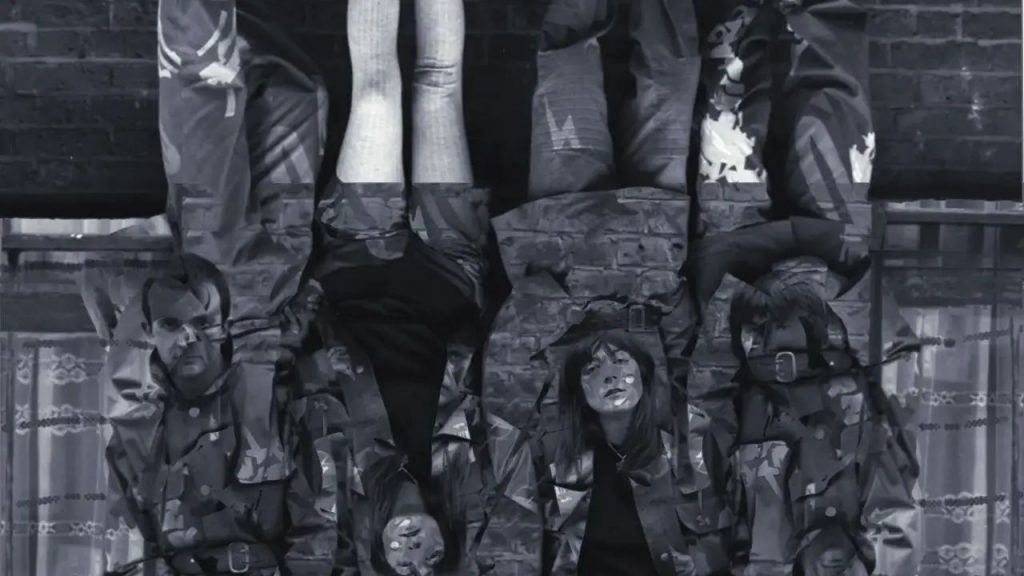
    Figure 1. Throbbing Gristle on Beck Road, Hackney (Throbbing Gristle, Beck Road, Hackney, 1980). Image edited by Sahara Brahmia, 2026.

    Meanwhile, Cabaret Voltaire turned everyday sounds, such as broadcast or radio recordings, into something that feels unshaven and unsettling, with irregular-flow. Morley (1980) describes The Voice of America as ‘moving and discomforting’. In the opening of the first track of ‘The Voice of America/Damage is Done‘ (Cabaret Voltaire, 1980), they used as sample a recording of a police man. At that time, as I was listening to the track, I noticed how this very ordinary sample, was building tension before the hypnotic and repetitive rhythm set in. For me, the most relevant aspect is how industrial music can provoke a reaction even when I find it uncomfortable to my ears, and I now think that is the core point of what makes the movement so controversial.

    ‘The Voice of America/Damage is Done’ by Cabaret Voltaire, 1980.

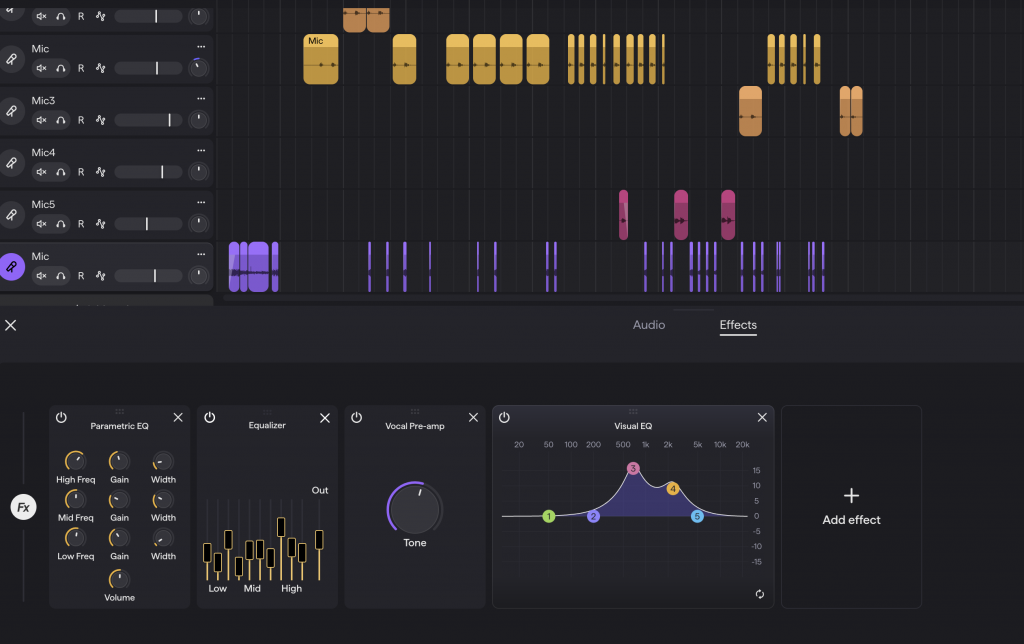
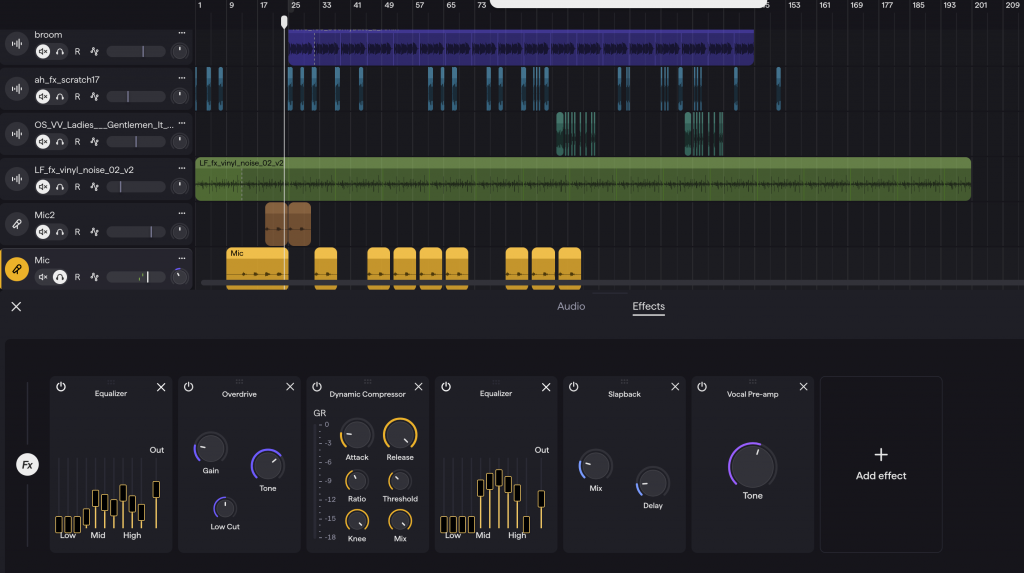
    Having read about industrial music and listened to these tracks, I now feel I can better translate how I use some of the same technique, such as chopping recorded words, in some of my own music. In 2020, during the first lockdown, I as browsing vintage recordings to use them a sample and came up with ‘Moonlight PM’ (Brahmia, 1956), I chopped up several vocal recordings and rearranged them in the track. One of the samples came from ‘I Put a Spell on You’ by Screamin’ Jay Hawkins (Hawkins, 1956). I was inspired by the grainy sound from1920s. I used EQ to bring out the midrange of the chopped vocal samples, which had already a grainy sound, supported by a layer of vinyl noise. Because I was looking to add a contrast to the tense track, and distortion, I wanted to soften it up with some more delicate vocals. To fit them with the vintage vibe I was going for, I shaped their tone with EG, added some grit with overdrive and used compression to even out their level.  

    Figure 2. Screenshots fom ‘Moonlight PM’ project (Brahmia, 2020).
    ‘I Put a Spell on you ‘ (Hawkins, 1956).

    Reading about industrial music helped me translate into words something I was already doing in 2020 with several of my unreleased tracks. I now wonder how far you can get by composing an entire track with chopped recordings without erasing its melodic essence.

    ‘Moonlight PM’ (Sahara, 2020).

    References

    References

    Brahmia, S. (2020) ‘Moonlight PM’ [sound recording]. SoundCloud. Available at: https://soundcloud.com/saharabrahmia/moonlight-pm.

    Cabaret Voltaire (1980) ‘The Voice of America/Damage Is Done’, The Voice of America [sound recording]. Rough Trade. Available at: https://cabaretvoltaire.bandcamp.com/track/the-voice-of-america-damage-is-done.

    Hawkins, S.J. (1956) ‘I Put a Spell on You’ [sound recording]. Okeh Records. Available at: https://www.youtube.com/watch?v=82cdnAUvsw8.

    Heetderks, D. (2014) ‘Review of S. Alexander Reed, Assimilate: A Critical History of Industrial Music (Oxford, 2013)’, Music Theory Online, 20(2). Available at: https://www.mtosmt.org/issues/mto.14.20.2/mto.14.20.2.heetderks.php (Accessed: 22 November 2026).

    Macabra, J. (2026) ‘Week 4: Production Aesthetics 2’, Introduction to Music Production [lecture outline]. University of the Arts London, Week 4.

    Mallinder, S. (2013) ‘Foreword’, in Reed, S.A., Assimilate: A Critical History of Industrial Music. Oxford University Press. Available at: https://academic.oup.com/book/12082/chapter-abstract/161434603.

    Morley, P. (1980) ‘The Heart and Soul of Cabaret Voltaire’, NME, 29 November. Available at: https://www.brainwashed.com/common/htdocs/publications/cv-nme_19801129.php?site=cv (Accessed: 22 November 2026).

    Throbbing Gristle (2004) ‘Splitting Sky’, A Souvenir of Camber Sands [live sound recording]. Available at: https://throbbinggristle.bandcamp.com/album/a-souvenir-of-camber-sands. throbbinggristle.bandcamp.com

    Throbbing Gristle, Beck Road, Hackney (1980) [photograph]. In The Ballad of Genesis and Lady Jaye [press kit]. Available at: https://medias.unifrance.org/medias/40/245/62760/presse/the-ballad-of-genesis-and-lady-jaye-presskit-english.pdf.