Written by Sahara Brahmia
Digital Audio Workstations (DAWs) – 3/5
I define myself as a producer because, to me, producing means taking the sounds I hear in my head and translating them into a composition. I can be walking down the street and hear something that sounds like a drone. If it gives me an idea, I record it as a voice note on my phone. Later, I try to recreate it in GarageBand or on my piano and link it with other ideas, like pieces of a chain, until it becomes a composition. When I work with other producers, I often take the lead on the creative direction. I usually have a clear idea of how I want a particular sound to feel like.
I don’t think a producer should be defined by how much they know about music software. Producers were making music long before DAWs existed. I still want to get more confident using Ableton, because that would help me bring more of my ideas to life on my own. I think a good producer can work with whatever they have access to in that moment, whether it’s their voice, the sound of train tracks, birds or the sound of water.
Recording techniques — 4/5 & Mixing and effects processing — 4/5
My recording style is very performative. When I compose, I sometimes think of a song as a piece of theatre or an opera, with different acts. That helps me building the vibe and the structure of the song, while still giving me room to sing freely. I feel like also working with other producers has helped me bring my ideas to life. I usually start with just my voice. My head is my main source of instrumentals. I have melodies playing in my head, and I sing the vocals as I hear them. I record the first idea in Voice Memos on my iPhone, listen back, and then record it again with my mic and interface. Layering the vocals help me start to hear the atmosphere.
I gave myself 4/5 because I feel confident taking an idea from a quick voice memo to a layered vocal recording.
I feel confident using EQ and effects to shape the mood of a track. I gave myself 4/5 because I can shape sounds to suit the atmosphere I want. I’d like to get better at keeping the vocal clear when there are several layers in the mix.
Sampling and synthesis — 3 or 4/5
I’m comfortable experimenting with both sampling and synthesis. For example, I used the AU Sampler in GarageBand to play a recording of my voice at different pitches, and I chopped up vocal recordings to create ambient textures. I gave myself 3/5 because I feel comfortable with the basics and still have room to develop my idea. My next goal is to make a whole track using my voice as the source for the melodies, textures and percussion.
MIDI sequencing and programming — 4/5
I feel confident using MIDI to try out different instrument sounds and develop my ideas into melodies and rhythms. Sometimes I start with an idea in my head, and it develops as I’m playing it on my keyboard. That’s what I enjoy about using MIDI. I can hear the idea straight away, play around with it and polish it as I go. My Arturia MiniLab comes practical when I want to get an idea down quickly. I gave myself 3/5 because I’m comfortable recording and editing MIDI. My next goal is to get better at programming the more complex rhythms I hear in my head, so they still feel natural when I play them back in my DAW.
Sound design and creative processing — 4/5 | Critical listening and analysis — 5/5
I’m a big fan of Beethoven because, while his foundations were based on a classical structure, he never limited himself by following strict compositions rules. Reading Caplin (1991, p. 27), I learned that Beethoven used the coda, the closing section, to keep building his ideas. I can relate to that in the way I compose. I like to have structure to guide me at first, but sometimes a melody and the feeling takes me in a different route.
Analyzing how Beethoven builds tension helped me understand how I use the structure of OWN IT (Brahmia, 2026) to surprise the listener. That shift causes the song to be more theatrical. As I was reading Caplin (1991, p. 31), I learned how sections can have a looser structure. He also discussed how Beethoven develops a short musical idea and sustain tension before a new musical idea begins. (Caplin, 1991, pp. 28-29, 41-42).
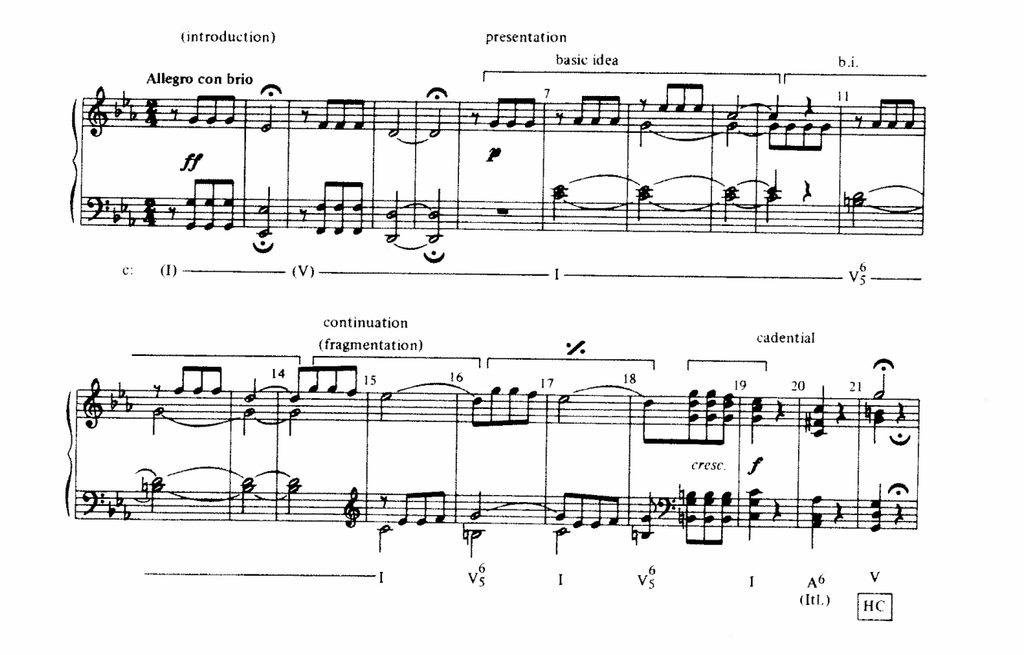
When I came across the concept for my song, I wanted the opening to sound like the start of a completely different track. That shift causes the song to be more dramatic. Both OWN IT (Brahmia, 2026) and Beethoven’s symphonic writing build momentum and large-scale structure by repeating and fragmenting core ideas, stretching sections by breaking out of a predictable melodic pattern, and delaying resolution to maximize emotional impact.
Communication — 5/5 | Collaboration — 4/5 & Organization and workflow — 4/5
I think part of being a good producer is understanding what an artist means when they describe a sound in their own words. In a Rolling Stone interview, Prince said of the artists he worked with, ‘They come to me with an idea, and I try to bring that forth’ (Karlen, 1985). That’s how I think about collaboration too. I want to know when to bring in my own ideas and when to step back and let the artist’s vision lead.
In terms of organization, In my own sessions, I often color-code my tracks because each song has its own shades. I also write ideas in my phone notes as soon as they come to me, so I can return to them when I’m making music.
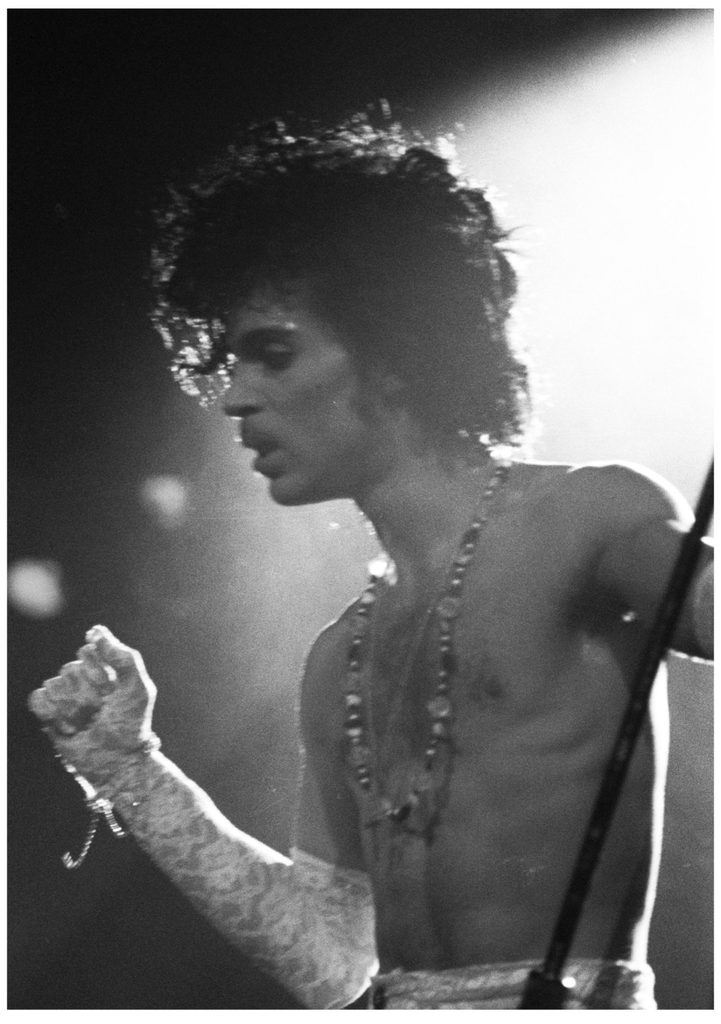
For me production is about vision, molding sound, coming up with melodies and turn them into a concept. I aim to be the kind of producer that surprise the listener.
References
Brahmia, S. (2026) OWN IT. Available at: Apple Music (Accessed: 25 November 2026). Apple Music
Brahmia, S. (2026) OWN IT – IDEA. Available at: Watch “OWN IT” by Sahara Brahmia on YouTube
Caplin, W.E. (1991) ‘Structural expansion in Beethoven’s symphonic forms’, in Kinderman, W. (ed.)
Caplin, W. E. (1991) ‘Structural expansion in Beethoven’s symphonic forms’, in Kinderman, W. (ed.) Beethoven’s compositional process. Lincoln: University of Nebraska Press, pp. 27–54.
Beethoven’s compositional process. Lincoln, NE: University of Nebraska Press, pp. 27–54. Available at: Chapter PDF (Accessed: 25 November 2026). www.cambridge.org
Desenio (no date) Prince Print [online image]. Available at: https://desenio.co.uk/p/posters-prints/black-and-white/prince-print/ (Accessed: 26 November 2026).
Karlen, N. (1985) ‘Prince talks’, Rolling Stone, 26 April. Available at: Prince In Print interview transcript (Accessed: 25 November 2026).
Leave a Reply