Written by Sahara Brahmia
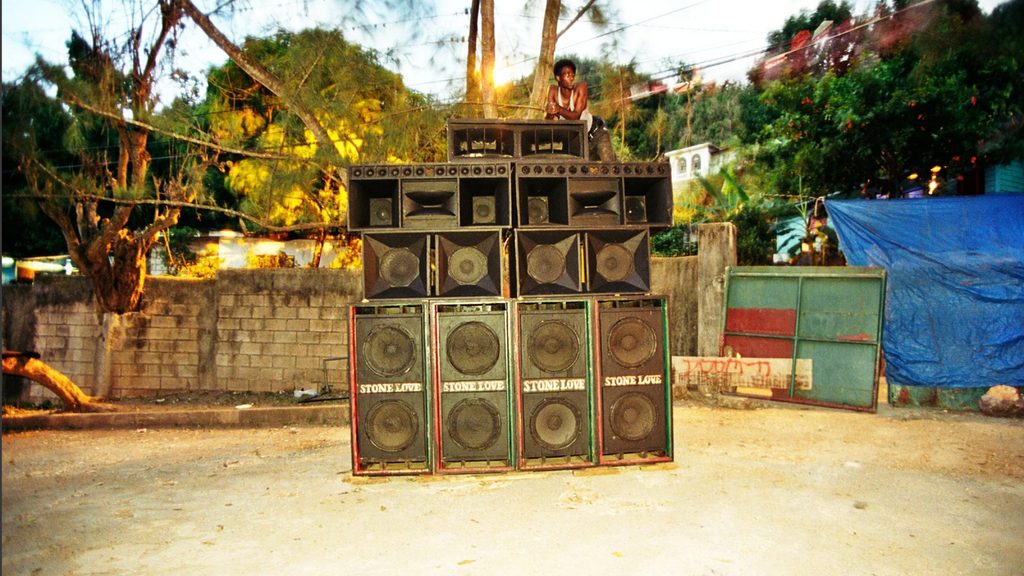
During week 2, I learned how dub music developed in Jamaica from the instrumental versions of reggae singles that appeared in the late 1960s (Herbst, 2016, p. 259). The pioneers of Dub music took existing reggae recordings and made new versions to the crowd, using the mixing desk to bring parts in and out and to emphasize echo and reverb to the front (Herbst, 2016, pp. 259-260).
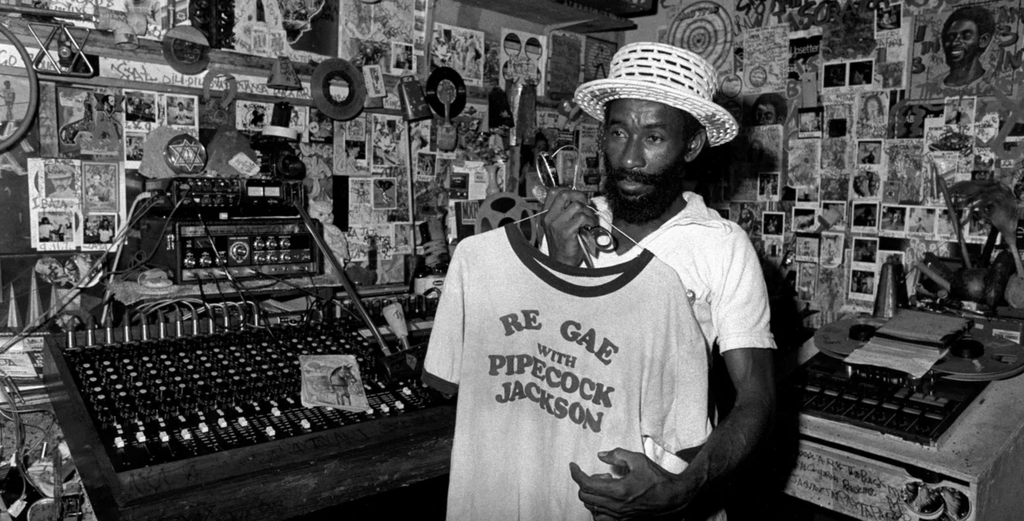
What stayed with me most is that dub music kept a jam session energy even as it developed into a studio practice. Veal (2007, cited in Herbst, 2016, p. 259) describes how producers remixed existing reggae recordings, improvising with effects. For me, the most meaningful aspects were that dub producers, rather than treating the mixing as a passive tool to simply record a band’s performance, played the console live. Improvising in real time, using faders, equalizers, spring reverb and tape delays (Herbst, 2016, pp. 259-260).
Learning that the band’s recorded performance gave the producers something to respond to made me think about my own production. While, structure is needed, I often prefer to record as if I’m jamming, to capture the true essence of that moment of the song, to let it to flow, freely. And that’s the spontaneity I relate to in Dub, even though my sound might differ from it.
As I was listening to Augustus Pablo’s ‘Corner Crew Dub’ (Pablo, 1977), I heard a melody that reminded me of the Hijaz Kar scale, most known as Arabic Scale in Western music theory. Additionally, another thing I noticed, was how the repeating bassline gave a hypnotic feeling and steadiness to the track. By learning more on the lead bassline, it led me to the track’s connection with Sound Dimension’s ‘Real Rock’ riddim (Sound Dimension, 2008; Riddimguide, n.d.). The connection helped me understand intertextuality, and how the groove link the two tracks and the skillful way producers managed to give the groove a different fee to the mix.
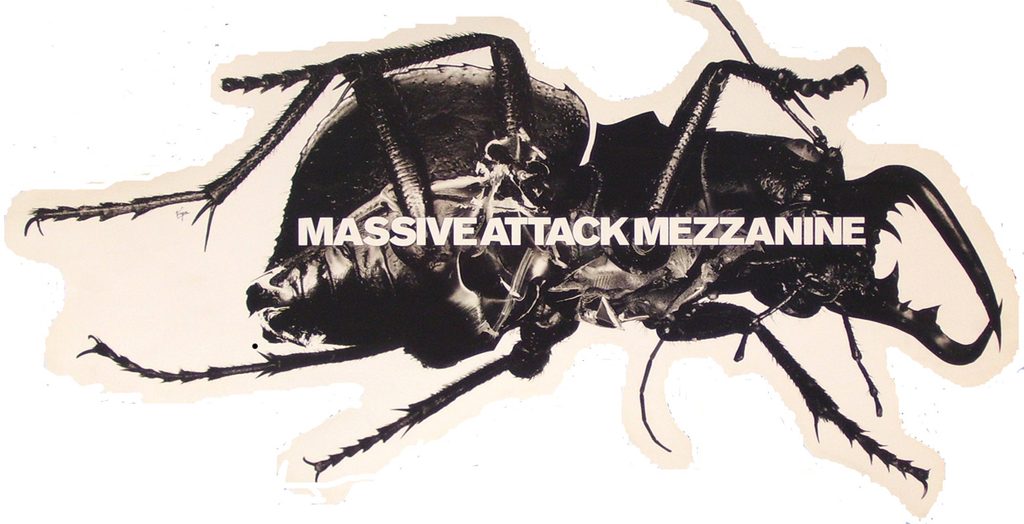
It made me think of how in ‘Angel’ (Massive Attack, 1998), the bass also remains distinct, as a distorted guitars build around Horace Andy’s voice. The first thing that caught my attention is the way the tension builds throughout the entire song, It’s violent, sexy, bold. As the texture gets heavier, the same bass also starts feeling more aggressive. And this is also one of my favorite things when it comes to producing a song: the slow-building intro. My motto is always, “Don’t give away too much too soon”. When a listeners think they decoded a song, you should surprise them. In ‘Angel’, the bass and vocals slowly build this almost uncomfortable tension throughout the song.
What stayed with me most about dub was the idea that the mix could become a performance of its own. I usually prefer to record as if I’m jamming because I like to capture the feeling of that specific moment. I’d like to carry that approach into my mixing. In one of my own tracks, I could keep the bassline going while bringing vocal layers in and out, or add delay to the last word of a line and let the echo fill the space that follows. I’d like to try making those decisions in real time, responding to my recorded vocals in the same way dub producers responded to the band’s performance.
References
Gonzales, M.A. (2018) ‘Twenty Years Later: On Massive Attack and Mezzanine’, The Paris Review, 20 April. Available at: https://www.theparisreview.org/blog/2018/04/20/twenty-years-later-on-massive-attack-and-mezzanine/ (Accessed: 24 November 2026).
Herbst, J.-P. (2016) ‘Remixing dub reggae in the music classroom: A practice-based case study on the educational value of music production for listening skills and stylistic analysis’, Journal of Music, Technology & Education, 9(3), pp. 255–272. Available at: https://doi.org/10.1386/jmte.9.3.255_1.
Massive Attack (1998) ‘Angel’, Mezzanine [sound recording]. Virgin Records. Available at: https://www.youtube.com/watch?v=HLrqNhgdiC0.
Pablo, A. (1977) ‘Corner Crew Dub’, King Tubbys Meets Rockers Uptown [sound recording]. Clocktower Records. Available at: https://www.roots-archives.com/album/322.
Rani (2016) ‘10 Pioneers of Jamaican Dub’, Project Revolver, 23 September. Available at: https://projectrevolver.org/lists/10-pioneers-jamaican-dub/ (Accessed: 24 November 2026).
Riddimguide (n.d.) ‘Augustus Pablo – King Tubby Meets The Rockers Uptown (CD)’ [database entry]. Available at: https://www.riddimguide.com/recdb/174/ (Accessed: 24 November 2026).
Sound Dimension (2008) ‘Real Rock’, Mojo Rocksteady Beat [sound recording]. Soul Jazz Records. Available at: https://soundsoftheuniverse.com/sjr/product/sound-dimension-mojo-rocksteady-beat.
Tilos Rádió (2026) Stone Love sound system speaker stack [photograph]. Available at: https://tilos.hu/episode/full-vocal/2026/02/26.
Leave a Reply